You've probably tried using ChatGPT or other general AI tools to write listing descriptions. And you've probably noticed the results are... fine. Generic. Maybe a little robotic.
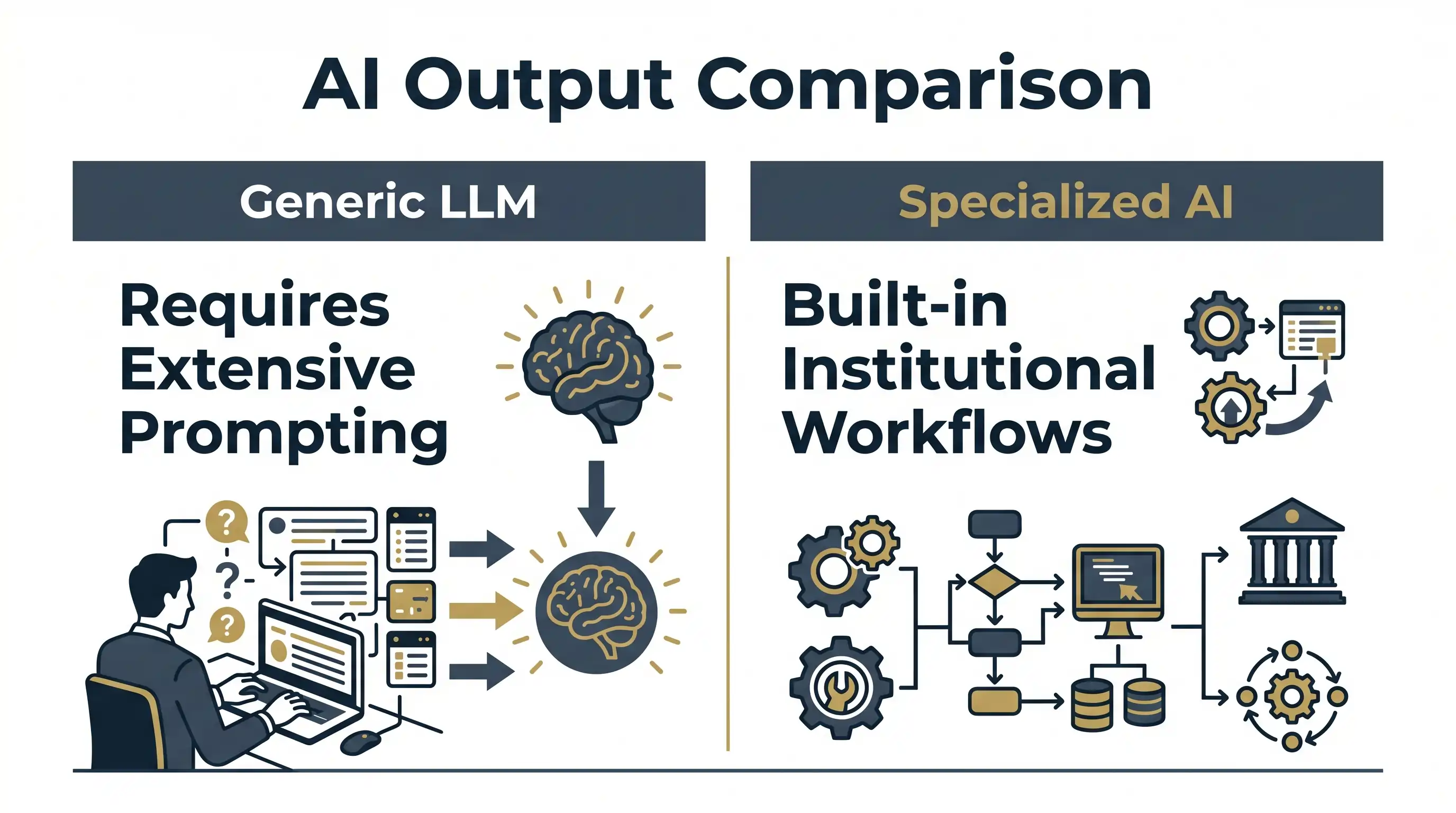
That's because general AI tools are designed for everything—and therefore optimized for nothing. But that doesn't mean they're useless. Let's break down when each approach makes sense.
This article discusses software capabilities and marketing strategies. AgentListingAI provides drafting tools, not legal counsel or guaranteed compliance shields. Real estate professionals assume all legal and fiduciary liability for the final listing copy published and must independently verify that all generated text complies with Fair Housing laws, local disclosure statutes, and advertising regulations. We do not guarantee protection against regulatory or civil liability.
Table of Contents
The Prompt Problem
When you ask ChatGPT to write a listing description, you need to provide extensive context. Here's what a good ChatGPT prompt actually looks like:
"Write a real estate listing description for a 4-bedroom, 3-bathroom Colonial-style home in Maplewood Estates, built in 2005, 2,800 sq ft. Features include a chef's kitchen with quartz countertops and Wolf range, hardwood floors throughout, primary suite with spa bath, finished basement, and private backyard with stone patio. Target audience is move-up families. Tone should be warm and inviting but professional. Avoid fair housing violations—don't mention schools, demographics, or family status. Keep it under 200 words. Start with an engaging hook. Don't use the words 'boasts' or 'nestled.'"
That's 100+ words just to ask a question. And even with all that context, you'll probably regenerate 2-3 times to get something usable.
What Specialized AI Gets Right
Purpose-built real estate AI tools flip the equation:
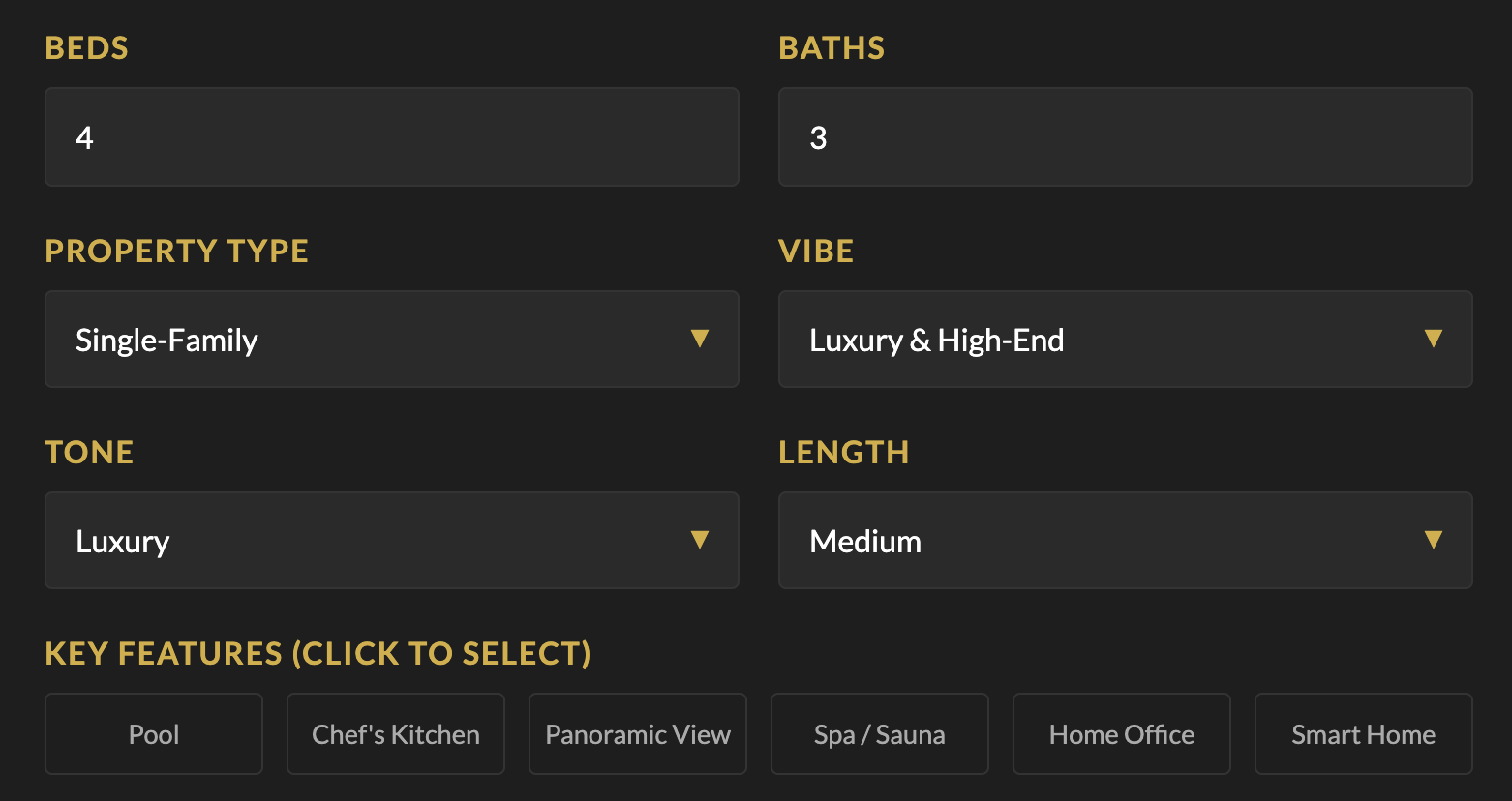
- Pre-trained on real estate vocabulary — Already knows power words and industry language
- Built-in tone options — Luxury, conversational, professional without explaining
- Fair Housing aware — Avoids problematic phrases automatically
- Structured inputs — No prompt engineering required
- Consistent quality — Same format every time
Side-by-Side Comparison
| Feature | ChatGPT | Specialized AI |
|---|---|---|
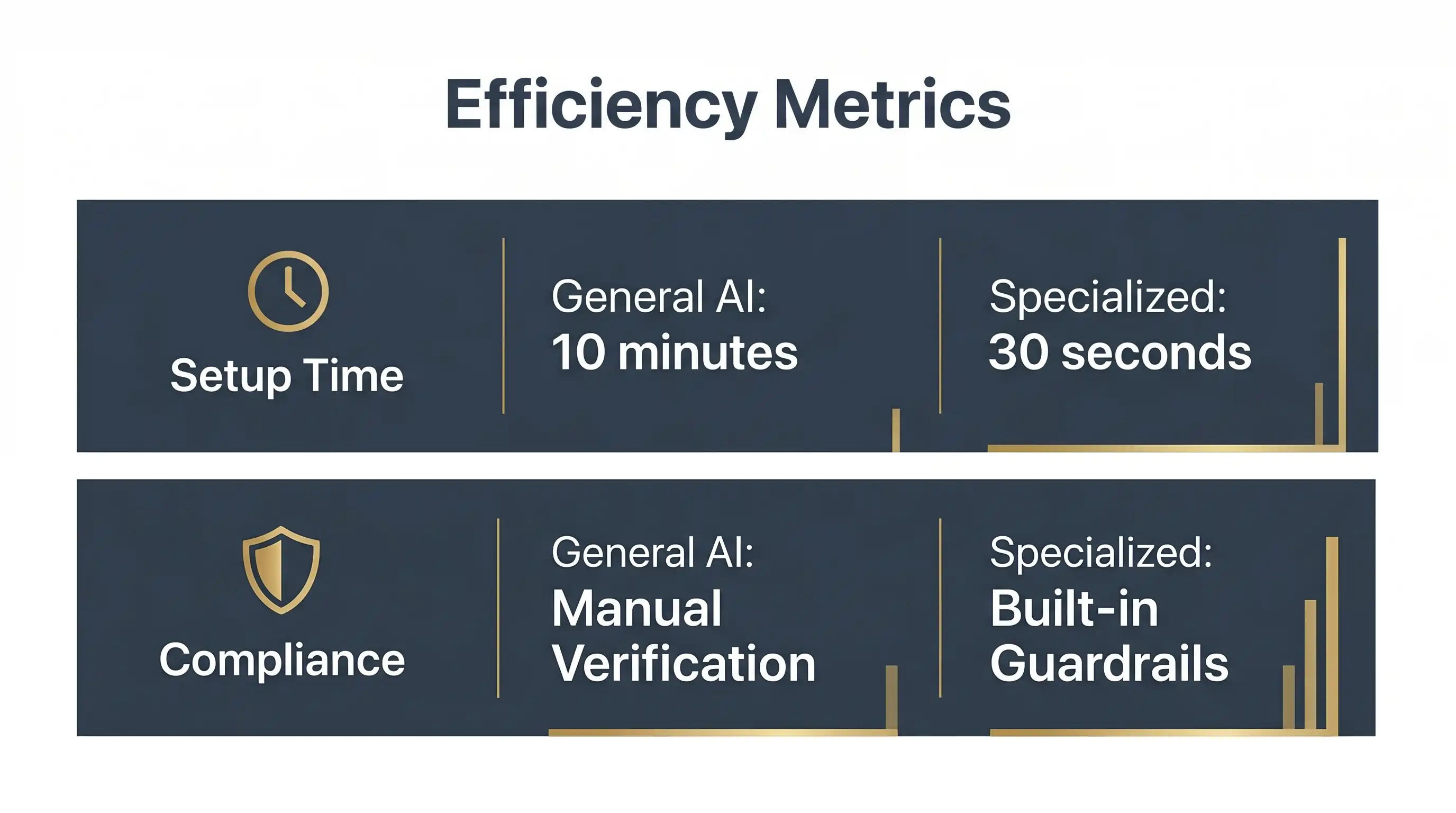
| Setup time | 5-10 minutes per prompt | 30 seconds |
| Real estate vocabulary | Basic | Extensive |
| Fair Housing compliance | Manual checking required | Built-in |
| Tone consistency | Varies by prompt | Consistent |
| Learning curve | High | None |
| Cost | $20/month (Plus) or free with limits | Free or specialized pricing |
| Flexibility | Unlimited—can do anything | Focused on listings |
Evaluating Real Estate AI Software in 2026
When selecting real estate ai software for your brokerage, it is critical to look past generic capabilities and focus on purpose-built infrastructure. The top-performing platforms are defined by these four core criteria:
- Data Privacy Protocols — Guarding proprietary client metrics.
- MLS System Integration — Direct pulling of structural specifications.
- Dynamic Tonality Engines — Seamless transitions from luxury to conversational styling.
- Compliance Guardrails — Automated filtration of restricted terms.
The return on investment when upgrading to purpose-built platforms is substantial. Brokerages report an average time-savings of 4.5 hours per week per agent when transitioning away from manual prompt engineering. This reclaimed time directly translates into higher lead generation capacity and more time spent in front of clients.
Beyond raw time savings, the financial ROI becomes evident rapidly. By standardizing marketing output across the entire team, brokerages eliminate the need for third-party copywriters, significantly reducing operational overhead while simultaneously elevating the brand's professional image.
The Evolution of AI for Real Estate: Beyond Chatbots
The first wave of ai for real estate relied entirely on open-ended chat interfaces. Agents were forced to act as prompt engineers, spending countless hours coaxing acceptable output from general-purpose models.
Today, the industry has shifted away from conversational friction and toward highly automated, push-button workflows. Instead of writing paragraphs of context, top producers rely on structured data inputs that instantly format listing details into polished marketing assets.
This evolution means that technology now adapts to the agent's workflow, rather than forcing the agent to learn how to speak to a machine.
A critical liability associated with generic models is the phenomenon of AI Hallucinations. General models often attempt to "fill in the blanks" when context is missing, fabricating non-existent features—such as a pool or a finished basement—that can result in severe legal and reputational damage if published without strict human oversight.
In contrast, specialized platforms operate on deterministic reliability. By pulling directly from structured MLS inputs and applying rigid compliance guardrails, these systems significantly reduce the invention of structural details, helping your marketing assets remain factual and accurate. Agents retain ultimate responsibility for verifying all claims.
Fine-tuned, specialized systems drastically reduce operator friction compared to manual prompt writing, allowing you to generate commercial-grade copy in seconds rather than minutes.
Prompt Engineering vs. Fine-Tuned Models
The heavy manual lift of pasting custom styling sheets, context data, tone parameters, and formatting restrictions into a raw chat window.
The rapid execution of supplying only basic structural specs while the localized architecture natively handles layout constraints, regulatory guardrails, and asset styling behind the scenes.
When ChatGPT Actually Wins
Let's be fair—there are scenarios where ChatGPT is the better choice:
- Unusual property types — A converted church, historic landmark, or live/work space might need creative framing a specialized tool wasn't trained on
- Heavily customized output — If you need specific formatting, bullet points, or a unique structure
- Beyond listings — Newsletter content, email campaigns, social media strategy, client communication
- Brainstorming — "Give me 10 different ways to describe this kitchen" as a starting point
- Multi-step workflows — If you're already in ChatGPT for other tasks, staying there makes sense
The key is knowing when the extra prompt engineering is worth it.
When to Use Each
Use ChatGPT for:
- Brainstorming and idea generation
- General marketing copy beyond listings
- One-off creative projects
- Unusual or non-standard properties
- Research and information gathering
Use Specialized Real Estate AI for:
- MLS listing descriptions
- Property marketing copy
- Consistent, high-volume output
- When time is critical
- When Fair Housing compliance matters most
The Hybrid Approach
Smart agents use both tools strategically:
- Generate the base with specialized AI — Get a solid, compliant listing description in 30 seconds
- Enhance with ChatGPT if needed — "Make this opening more dramatic" or "Add a line about the neighborhood's walkability"
- Use ChatGPT for everything else — Email followups, social captions, marketing strategy
This workflow gives you the speed of specialized tools with the flexibility of general AI when you need it.
The Quality Difference
Here's the same property described by each:
Generic AI Output:
This beautiful 4-bedroom home features a spacious kitchen, large backyard, and updated bathrooms. Located in a great neighborhood with excellent schools nearby. A must-see property!
Specialized Real Estate AI Output:
Welcome to this sun-drenched Colonial gem in coveted Maplewood Estates. The chef's kitchen—featuring quartz countertops and commercial-grade appliances—opens seamlessly to a private backyard oasis perfect for al fresco entertaining. Four generous bedrooms include a primary suite with spa-inspired bath. Thoughtfully updated throughout, this turnkey residence invites you to move in and start living the lifestyle you deserve.
The difference is clear. One sounds like AI filling in blanks. The other sounds like a top producer wrote it.
Experience the Difference
Try our specialized real estate AI and see how fast you can generate expert listing descriptions.
Try the Free AI Listing Generator →Frequently Asked Questions
Does specialized AI write better than a human operator?
It establishes a baseline. For standard property listings, a specialized system consistently produces commercial-grade, compliant copy faster than most operators can draft a first version. It acts as an professional foundation that you can then refine.
Will Google penalize listings written by AI?
Google has explicitly stated they reward high-quality content however it is produced. If your property description is accurate, helpful, and provides value to the prospective buyer, the underlying generation method does not trigger penalties.
How does built-in Fair Housing compliance work?
Specialized tools operate on strict, pre-configured guardrails. They are designed to filter terms related to demographics, familial status, or restricted neighborhood descriptions, helping focus your output on the property structure. Agents must independently verify all generated text for legal compliance.
Final Thoughts
There's no "best" AI tool—only the right tool for the job. General AI is powerful and flexible. Specialized AI is fast and focused.
For the daily grind of listing descriptions? Specialized tools win on speed, consistency, and compliance. For everything else? ChatGPT is incredibly capable.
The best approach is to use both—and know when each one shines.